
Contents
- ⏳ Origins: The Pre-Digital Hunt for Signals
- ⚙️ The Mechanics: Refining Raw Data
- 📊 Quantifying the Effort: Key Metrics
- 👤 Architects of Insight: Key Figures
- 🌍 Global Reach: Data's Worldwide Influence
- ⚡ The Cutting Edge: Real-Time Opportunity
- ⚖️ Debates in Data: Purity vs. Speed
- 🔮 The Future: Predictive Precision
- 💡 Applied Opportunity: Real-World Use Cases
- 📚 Further Exploration: Deepening Your Grasp
- References
Overview
In the relentless pursuit of seizing opportunities, the critical first step is often overlooked: data preprocessing. This isn't just about cleaning numbers; it's about transforming raw, unrefined information into a clear, actionable signal that reveals the opportune moment before it vanishes. Think of it as sifting through a mountain of potential leads to find the single, high-probability prospect that requires immediate attention. Effective preprocessing ensures that the data fed into any decision-making engine—be it a human analyst or an AI model—is accurate, relevant, and free from the noise that can obscure critical insights. Without this meticulous preparation, even the most sophisticated analysis will falter, leading to missed chances and wasted resources. The speed and accuracy of this initial data transformation directly correlate with the ability to act decisively, making it a cornerstone of any strategy focused on not missing that window.
⏳ Origins: The Pre-Digital Hunt for Signals
Long before digital datasets, the essence of data preprocessing was about discerning valuable information from noise. Early traders on the New York Stock Exchange meticulously reviewed ticker tape data, filtering out extraneous chatter to identify subtle market shifts that signaled a buying or selling opportunity. Similarly, intelligence analysts in wartime would sift through intercepted communications, a process akin to data cleaning, to extract actionable intelligence before enemy actions could be executed. The advent of computing power in the mid-20th century began to formalize these processes. However, the true explosion in data preprocessing's importance arrived with the Big Data era, where the sheer volume, velocity, and variety of information necessitated robust, automated techniques to extract meaningful patterns before opportunities evaporated.
⚙️ The Mechanics: Refining Raw Data
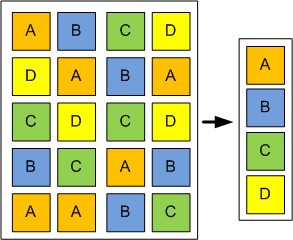
At its core, data preprocessing involves several key transformations to prepare raw data for analysis. This includes handling missing values, where techniques range from simple imputation (filling gaps with means or medians) to more complex model-based predictions, ensuring that incomplete records don't skew results. Noise reduction is crucial, employing methods like binning, regression, or clustering to smooth out random errors and outliers that could lead to false conclusions. Data transformation might involve normalization or standardization to bring values to a common scale, essential for algorithms sensitive to feature ranges. Data reduction aims to obtain a smaller, yet equivalent, representation of the dataset, perhaps by dimensionality reduction techniques like Principal Component Analysis (PCA), making analysis faster and more efficient without losing critical signals.
📊 Quantifying the Effort: Key Metrics
The scale of data preprocessing efforts can be staggering. Reports suggest that data scientists spend a significant portion of their time on data preparation tasks, a figure that underscores its critical importance. A single large-scale machine learning project might involve terabytes of raw data, requiring hundreds of hours of computational processing for cleaning and transformation. The quality of preprocessing can directly impact model performance; improvements in data quality can lead to significant increases in predictive accuracy for supervised learning models. Furthermore, the cost of poor data quality is substantial, highlighting the financial imperative for rigorous preprocessing.
👤 Architects of Insight: Key Figures
While data preprocessing is a systematic process, certain individuals and organizations have been pivotal in its development and popularization. Pioneers in statistics and computer science, such as John Tukey, whose work on exploratory data analysis laid groundwork for understanding data imperfections, and later figures in machine learning like Geoffrey Hinton and Yann LeCun, whose advancements in deep learning rely heavily on meticulously prepared datasets, are foundational. Organizations have developed sophisticated internal tools and open-source libraries, such as Scikit-learn and Apache Spark, which have become industry standards for efficient data manipulation. The proliferation of online courses and certifications from platforms like Coursera and Udemy has also democratized the knowledge of these techniques.
🌍 Global Reach: Data's Worldwide Influence
Data preprocessing is a global necessity, transcending geographical boundaries. In financial markets, firms in London, New York, and Tokyo all employ similar techniques to clean trading data, ensuring rapid identification of arbitrage opportunities. In healthcare, researchers worldwide, from the University of Oxford to the National University of Singapore, preprocess patient records to identify disease patterns and improve treatment efficacy. The development of open-source tools like R and Python has facilitated a global community of practice, where preprocessing methodologies are shared and refined across continents, enabling faster discovery and action on a worldwide scale.
⚡ The Cutting Edge: Real-Time Opportunity
The drive to seize opportunities before they vanish necessitates real-time data preprocessing. Consider algorithmic trading platforms that must clean and analyze market feeds in milliseconds to execute trades. In fraud detection, systems like those used by Visa or Mastercard preprocess transaction data instantaneously to flag suspicious activity before a fraudulent charge can be completed. The rise of IoT devices generates continuous streams of sensor data that require immediate preprocessing for applications ranging from predictive maintenance on industrial machinery to real-time traffic management in smart cities. This shift towards low-latency preprocessing is crucial for capturing fleeting opportunities in dynamic environments.
⚖️ Debates in Data: Purity vs. Speed
A central debate in data preprocessing revolves around the trade-off between data purity and speed. Some argue for exhaustive cleaning and validation, ensuring the highest possible data integrity, even if it means longer processing times. This approach is critical in sensitive fields like medical research or legal compliance, where even minor inaccuracies can have severe consequences. Conversely, in high-frequency trading or real-time anomaly detection, speed is paramount. Here, approximations and heuristic methods might be employed, accepting a degree of potential error for the sake of immediate action. The optimal balance often depends on the specific downstream application and the cost of making a wrong decision versus the cost of missing an opportunity.
🔮 The Future: Predictive Precision
The future of data preprocessing is intrinsically linked to advancements in AI and machine learning. We are moving towards more automated and intelligent preprocessing pipelines, often referred to as AutoML (Automated Machine Learning). These systems can automatically explore various preprocessing strategies, select the most effective ones for a given task, and even generate new features. Techniques like federated learning are also emerging, allowing data to be preprocessed and models trained locally on distributed devices without centralizing sensitive raw data, addressing privacy concerns. Expect preprocessing to become even more integrated and seamless, with AI agents proactively identifying and rectifying data issues before human analysts even notice them.
💡 Applied Opportunity: Real-World Use Cases
Data preprocessing is not an abstract concept; it's the engine behind countless real-world applications. In marketing, businesses preprocess customer data from sources like Salesforce and Facebook to identify high-value segments for targeted campaigns, maximizing return on ad spend. For autonomous vehicles, sensor data (lidar, radar, cameras) undergoes rapid preprocessing to interpret the environment, enabling safe navigation. Scientific research across disciplines, from genomics to astrophysics, relies on preprocessing vast datasets to uncover new discoveries. Even in everyday applications like personalized recommendations on Netflix or Spotify, underlying data preprocessing ensures that suggestions are relevant and timely, enhancing user experience.
📚 Further Exploration: Deepening Your Grasp
To truly master the art of seizing opportunities, a deeper understanding of data preprocessing is essential. Exploring the nuances of feature engineering can unloc
Key Facts
- Category
- technology
- Type
- topic