
Contents
Overview
The genesis of ancient Greek philosophy can be traced to the Ionian coast of Asia Minor around the 6th century BC, a period marked by burgeoning trade and cultural exchange. Pre-Socratic thinkers like Thales of Miletus sought naturalistic explanations for the cosmos, moving away from mythological narratives. Thales famously proposed water as the fundamental substance, a radical departure from divine explanations. This era also saw the rise of figures like Anaximander, who introduced the concept of the 'apeiron' (the boundless), and Pythagoras, who emphasized the mathematical structure of reality. These early philosophers, often referred to as the Pre-Socratics, established a tradition of rational inquiry and critical examination that would define the subsequent trajectory of Western thought, influencing later thinkers like Heraclitus and Parmenides.
⚙️ Core Concepts & Schools
At its heart, ancient Greek philosophy grappled with fundamental questions about existence, knowledge, values, reason, mind, and language. Key concepts include metaphysics, the study of the fundamental nature of reality; epistemology, the theory of knowledge; ethics, concerning moral principles; and logic, the principles of valid reasoning. The Sophists, such as Protagoras, challenged traditional notions of truth and morality, emphasizing rhetoric and human perception. This intellectual ferment set the stage for the Socratic method, pioneered by Socrates, which used dialectic to expose ignorance and arrive at clearer understanding, a method later refined by his student Plato in his dialogues.
📊 Key Figures & Their Ideas
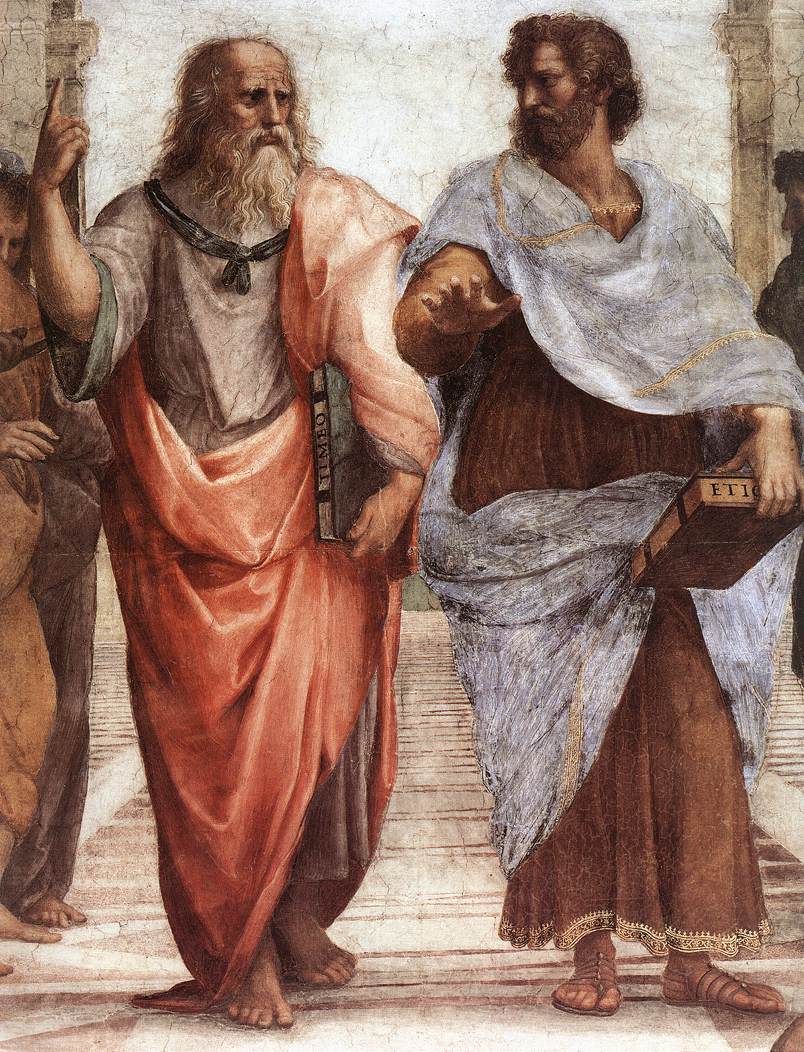
The pantheon of ancient Greek thinkers is vast, but certain figures stand as colossal pillars. Socrates, though he wrote nothing himself, profoundly shaped philosophy through his relentless questioning and ethical focus, famously stating "the unexamined life is not worth living." His student, Plato, developed the theory of Forms, positing a realm of perfect, eternal ideas accessible through reason. Plato's most brilliant student, Aristotle, systematized logic, and made groundbreaking contributions to biology, physics, ethics, and political science, developing the concept of virtue ethics and the Golden Mean. Their works, preserved through centuries, form the bedrock of Western philosophical inquiry.
👥 Major Schools of Thought
Beyond individual titans, distinct schools of thought emerged, each offering unique perspectives. The Platonic Academy continued Plato's legacy, while Aristotle's Peripatetic School emphasized empirical observation. The Stoics, founded by Zeno of Citium, advocated for virtue, reason, and living in accordance with nature, influencing Roman thinkers like Epictetus and Marcus Aurelius. The Epicureans, following Epicurus, sought pleasure through moderation and freedom from fear. Skepticism, championed by figures like Pyrrho of Elis, questioned the possibility of certain knowledge, advocating for suspension of judgment. These schools, though often in debate, collectively expanded the philosophical landscape.
🌍 Influence on Western Civilization
The impact of ancient Greek philosophy on Western civilization is immeasurable. Its emphasis on reason, logic, and critical inquiry became the foundation for scientific methodology, political theory, and ethical systems. Concepts of democracy, justice, and the rule of law, explored by thinkers like Aristotle in his Politics, continue to shape modern governance. The influence is so pervasive that Alfred North Whitehead famously remarked, "The safest general characterization of the European philosophical tradition is that it consists of a series of footnotes to Plato."
⚡ Enduring Legacy & Modern Relevance
The intellectual currents of ancient Greece remain vibrantly relevant. Modern discussions on AI ethics, for instance, often echo Aristotle's considerations of virtue and purpose. Debates in political philosophy still draw upon the ideas of Plato and Aristotle regarding ideal governance and citizenship. The Stoic emphasis on resilience has seen a resurgence in popularity, with modern applications in psychology and self-help. Furthermore, the very practice of academic philosophy, with its rigorous argumentation and systematic analysis, is a direct inheritance from the ancient Greek tradition, continuing to be taught at institutions like the University of Oxford and Harvard University.
🤔 Debates and Criticisms
Despite its profound influence, ancient Greek philosophy has faced enduring criticisms. Some scholars argue that the emphasis on abstract reason, particularly in Platonism, neglected the importance of empirical experience and the material world, a critique often leveled by proponents of empiricism. The hierarchical social structures in Aristotle's works, particularly his views on slavery and women, are subjects of intense ethical scrutiny today. Furthermore, the teleological worldview, which posits inherent purposes in nature, has been challenged by modern scientific understandings of evolution and physics, particularly by figures associated with scientific naturalism.
🔮 Future Trajectories
The future trajectory of engaging with ancient Greek philosophy likely involves continued reinterpretation through contemporary lenses. As fields like neuroscience advance, they may offer new ways to understand or challenge ancient ideas about the mind and consciousness. The ongoing development of computational philosophy could provide novel tools for analyzing the logical structures and arguments of ancient texts. Moreover, as global philosophical traditions become more interconnected, there may be increased efforts to synthesize Greek thought with Eastern philosophies, potentially leading to new hybrid intellectual frameworks that transcend traditional Western-centric narratives.
💡 Practical Applications in Thought
The practical applications of ancient Greek philosophy are woven into the fabric of modern life, often unconsciously. The Socratic method remains a cornerstone of legal education and critical thinking pedagogy, encouraging individuals to question assumptions and rigorously examine beliefs. Stoic principles are actively employed in Cognitive Behavioral Therapy (CBT) to manage negative emotions and cultivate resilience. Concepts of justice and political organization, first articulated by Plato and Aristotle, continue to inform constitutional law and democratic theory worldwide. Even the scientific method owes a debt to the Greek emphasis on observation and logical deduction, pioneered by Aristotle.
Key Facts
- Category
- philosophy
- Type
- concept