
Contents
Overview
Released in 1963, 'The Freewheelin' Bob Dylan' wasn't just an album; it was a cultural detonation. It captured the zeitgeist of a nation grappling with civil rights and Cold War anxieties, channeling it through Dylan's raw, poetic voice. Tracks like 'Blowin' in the Wind' and 'A Hard Rain's a-Gonna Fall' became anthems, their simple melodies belying profound lyrical depth. The album cemented Dylan's status as a voice of his generation, showcasing his evolving folk sound and his burgeoning lyrical genius. Its impact reverberated through folk music, protest songs, and the very idea of what a singer-songwriter could achieve.
🎶 What is The Freewheelin' Bob Dylan?
The Freewheelin' Bob Dylan is the second studio album by American singer-songwriter Bob Dylan, released on May 27, 1963, by Columbia Records. More than just a collection of songs, it's a cultural artifact that captured the zeitgeist of the early 1960s folk revival and cemented Dylan's reputation as a voice of his generation. The album is a masterclass in songwriting, blending personal introspection with sharp social commentary, delivered with Dylan's signature nasal drawl and acoustic guitar. It's essential listening for anyone interested in the evolution of American folk music and protest songs.
📅 Release & Context: A Pivotal Moment
Released just over a year after his debut, The Freewheelin' Bob Dylan marked a dramatic leap in Dylan's songwriting prowess. Recorded primarily in New York City during sessions in late 1962 and early 1963, the album arrived at a time of burgeoning civil rights activism and growing unease about the Cold War. Dylan, then just 22, found himself at the epicenter of the Greenwich Village folk scene, and this album became his definitive statement, showcasing a maturity and lyrical depth that surprised many.
🌟 Key Tracks & Lyrical Themes
The album is renowned for its iconic tracks, including the anti-establishment anthem "Blowin' in the Wind", the poetic "Girl from the North Country," and the scathing "Masters of War." Lyrically, Freewheelin' navigates themes of social injustice, war, love, and existential questioning. Dylan's ability to weave intricate narratives and vivid imagery, often drawing from folk traditions and Beat poetry, set a new standard for lyrical content in popular music.
🎸 Musical Style & Instrumentation
Musically, the album is rooted in American folk and blues traditions, characterized by Dylan's acoustic guitar fingerpicking and harmonica solos. While the instrumentation is sparse, it perfectly complements the raw emotion and lyrical focus of the songs. The production, overseen by John Hammond, captures an intimate, live-in-the-studio feel, allowing Dylan's voice and lyrics to take center stage without unnecessary embellishment.
🏆 Critical Reception & Legacy
Upon its release, The Freewheelin' Bob Dylan was met with widespread critical acclaim, though some initially found its lyrical content challenging. It quickly climbed the charts, reaching number 22 on the Billboard 200, and has since been recognized as one of the greatest albums of all time by numerous publications, including Rolling Stone. Its enduring appeal lies in its timeless themes and Dylan's singular artistic vision.
🤔 Controversies & Debates
The album wasn't without its controversies. The original pressing included a song, "Talkin' John Birch Paranoid Blues," which was later replaced due to pressure from Columbia Records, fearing backlash from conservative groups. This incident highlighted the potent political charge of Dylan's music and the establishment's unease with his outspokenness, a tension that would follow him throughout his career.
📈 Influence & Impact
The influence of The Freewheelin' Bob Dylan on subsequent generations of musicians is immeasurable. It inspired countless artists to explore more personal and political themes in their songwriting and demonstrated the commercial viability of folk and protest music. Paul McCartney has cited it as a major influence, and its songs have been covered by hundreds of artists across genres, solidifying its place in the popular music canon.
💡 For the Curious Listener
For listeners new to Bob Dylan, The Freewheelin' Bob Dylan serves as an ideal entry point. It encapsulates the raw talent and burgeoning genius that would define his legendary career. Pay close attention to the interplay between his harmonica and guitar, and try to decipher the layered meanings within his poetic lyrics. Consider listening alongside his later works, like Highway 61 Revisited, to witness his rapid artistic evolution.
Key Facts
- Year
- 1963
- Origin
- Columbia Records
- Category
- Music History
- Type
- Album
Frequently Asked Questions
What makes "Blowin' in the Wind" so significant?
"Blowin' in the Wind" became an anthem for the civil rights and anti-war movements due to its poignant, rhetorical questions about peace, war, and freedom. Its simple yet profound lyrics resonated deeply with a generation seeking change, making it one of the most recognizable and covered protest songs in history.
Was Bob Dylan really a voice of a generation?
Many contemporaries and critics certainly viewed him as such, particularly with this album. His ability to articulate the anxieties and aspirations of young people through his lyrics, combined with his anti-establishment persona, positioned him as a spokesperson for a generation grappling with social and political upheaval.
How does this album differ from Dylan's debut?
Dylan's self-titled debut album featured mostly covers and a few original compositions. The Freewheelin' Bob Dylan, however, is overwhelmingly comprised of original material, showcasing a dramatic increase in his lyrical complexity, thematic depth, and distinctive vocal style, establishing him as a major songwriting talent.
What is the significance of the album cover photo?
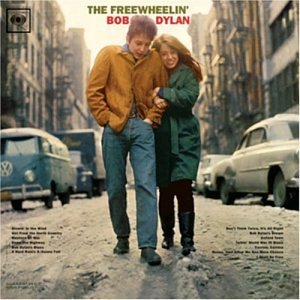
The iconic cover photo, featuring Dylan walking arm-in-arm with then-girlfriend Suze Rotolo on a snowy street in Greenwich Village, became synonymous with the album's bohemian and romantic spirit. It visually represented the counterculture movement and Dylan's burgeoning artistic identity.
Are there any other notable songs on the album besides the hits?
Absolutely. Tracks like "Down the Highway" offer a bluesy lament, "Bob Dylan's Blues" provides a more playful, self-referential take, and "I Shall Be Free" showcases a more optimistic, albeit still characteristically wry, outlook. Each song contributes to the album's rich tapestry of themes and moods.