
Contents
Overview
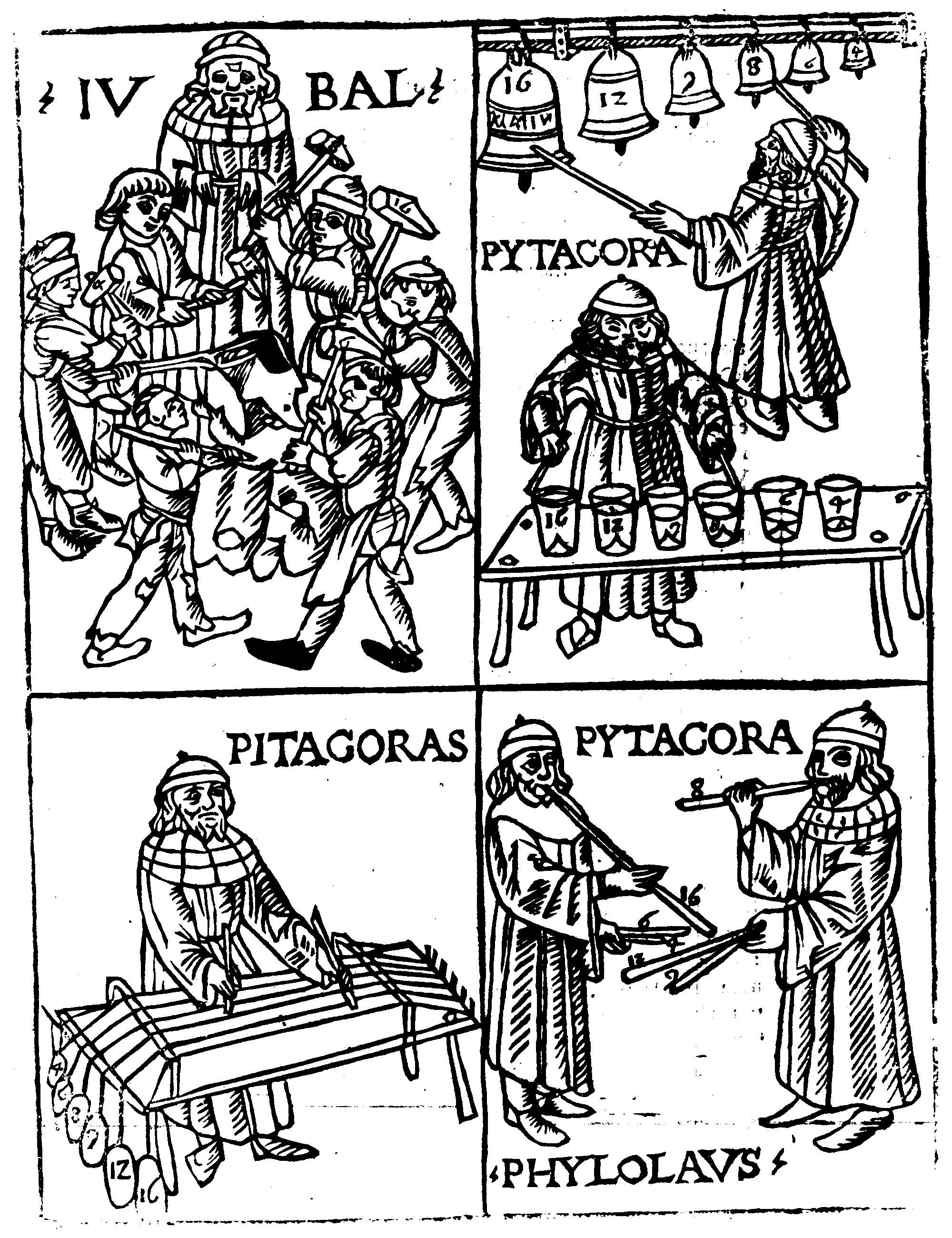
Foundational concepts in music theory emerged from ancient civilizations. Greek philosophers like Pythagoras explored mathematical ratios in musical intervals. During the medieval period, theorists like Boethius codified modal systems in his treatise "De institutione musica," influencing Western music for centuries. The Renaissance saw further development with figures whose compositional style became a benchmark for counterpoint. The Baroque era brought significant advancements, notably Jean-Philippe Rameau's "Treatise on Harmony" (1722), which systematized tonal harmony and chord progressions, a paradigm shift that dominated Western music. The 20th century witnessed a fragmentation and expansion of theoretical approaches, moving beyond traditional tonality with figures like Arnold Schoenberg (1874–1951) and his development of twelve-tone technique.
⚙️ How It Works
At its core, music theory dissects music into its constituent elements: pitch, rhythm, harmony, melody, and form. Pitch is organized into scales and modes, defining the tonal landscape, while harmony explores the simultaneous sounding of pitches, creating chords and progressions. Rhythm governs the temporal organization of music, dictating note durations and accents. Melody is a sequence of pitches perceived as a coherent unit, often shaped by harmonic context. Form refers to the overall structure and organization of a musical piece, from simple song forms to complex symphonic movements. Modern music theory also delves into concepts like voice leading, counterpoint, orchestration, and the psychoacoustics of sound perception, often employing mathematical models and computational analysis to understand these phenomena. The study of tuning systems, such as equal temperament versus just intonation, is crucial for understanding harmonic color and intonational nuances.
📊 Key Facts & Numbers
The Western tonal system, dominant for centuries, is built upon a diatonic scale of seven notes, with semitones and whole tones defining intervals. There are 12 distinct pitches within an octave in Western music, forming the basis of the chromatic scale. A standard piano keyboard has 88 keys, representing 7 octaves plus a few extra notes. The concept of a perfect fifth interval, a ratio of 3:2, is fundamental to Pythagorean tuning and has been a cornerstone of Western harmony for millennia. The average human ear can distinguish approximately 1,500 different pitches. A typical symphony orchestra comprises around 80-100 musicians, playing instruments across string, woodwind, brass, and percussion families.
👥 Key People & Organizations
Key figures in music theory include Pythagoras, credited with early investigations into musical intervals. Claudius Ptolemy (c. 100–170 CE) further refined Greek musical theory. In the medieval period, Hildegard of Bingen (1098–1179) composed extensively and her musical theories are still studied. Guido of Arezzo (c. 991/992 – after 1033) is credited with inventing musical notation as we know it. Jean-Philippe Rameau (1683–1764) revolutionized harmonic theory with his systematic approach. Later, Henri-Ernst Casimir Chailley (1910–1997) made significant contributions to musicology and theory. Organizations like the American Musicological Society and the Royal Musical Association foster research and discourse in the field.
🌍 Cultural Impact & Influence
Music theory has profoundly shaped Western musical practice, providing the language and structure for genres ranging from classical to jazz and pop. The development of functional harmony in the Baroque era, codified by theorists like Rameau, became the bedrock of countless musical compositions. The principles of counterpoint, extensively studied since the Renaissance, continue to inform compositional techniques. In the 20th century, the exploration of atonality and serialism by composers like Arnold Schoenberg and Anton Webern challenged traditional theoretical frameworks, leading to new compositional possibilities. The influence extends beyond Western music; theoretical concepts are crucial for understanding and comparing diverse musical traditions globally, from the maqam system in Arabic music to the raga system in Indian classical music. The advent of digital audio workstations has also democratized access to theoretical tools.
⚡ Current State & Latest Developments
The current landscape of music theory is characterized by increasing interdisciplinarity and the integration of computational methods. Researchers are using machine learning algorithms to analyze vast datasets of music, identifying patterns and predicting compositional trends. The study of psychoacoustics is gaining prominence, exploring how the human brain perceives and processes musical stimuli. There's a growing emphasis on non-Western music theory, with scholars actively documenting and analyzing diverse global traditions, moving away from a solely Eurocentric perspective. The development of algorithmic composition tools, such as Max/MSP and Pure Data, allows for the creation of music based on theoretical rules and parameters, pushing the boundaries of creative expression. The accessibility of online courses and resources from platforms like Coursera and YouTube has also broadened engagement with music theory.
🤔 Controversies & Debates
One persistent debate concerns the prescriptive versus descriptive nature of music theory. Should theory dictate how music should be written (prescriptive), or merely describe how it is written (descriptive)? This tension is evident in discussions about whether jazz improvisation adheres to or breaks traditional harmonic rules. Another controversy surrounds the dominance of Western tonal theory, with critics arguing it marginalizes non-Western musical systems and overlooks the theoretical underpinnings of other cultures. The role of technology in music theory is also debated: does algorithmic composition enhance or diminish human creativity? Furthermore, the perceived complexity and abstraction of some theoretical concepts, particularly in post-tonal music, lead to questions about their practical utility for many musicians. The debate over the definition of music itself, and thus the scope of music theory, remains ongoing.
🔮 Future Outlook & Predictions
The future of music theory is likely to be shaped by advancements in artificial intelligence and data science. AI-powered tools may become indispensable for composers, assisting in harmonic generation, melodic development, and even stylistic emulation. Expect a continued expansion of theoretical frameworks to encompass new genres and experimental music, potentially leading to entirely new ways of organizing sound. The integration of virtual reality and augmented reality could offer immersive ways to learn and interact with theoretical concepts. Furthermore, as global musical exchange intensifies, music theory will likely become more integrated, with scholars developing more sophisticated models for cross-cultural musical analysis. The development of more intuitive music notation software that incorporates theoretical analysis will also be a key trend.
💡 Practical Applications
Music theory is not just for academics; it's a vital tool for practical musicians. Composers use its principles to structure their works, create compelling melodies, and craft rich harmonies. Performers rely on theoretical knowledge to interpret scores accurately, improvise effectively (especially in genres like jazz), and understand the underlying structure of the music they play. Music educators use theory to teach students the fund
Key Facts
- Category
- aesthetics
- Type
- topic