
Contents
Overview
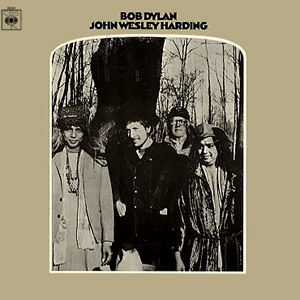
The genesis of "John Wesley Harding" emerged from Bob Dylan's desire to retreat from the public eye. After the experimental, electric soundscapes of "Highway 61 Revisited" and "Blonde on Blonde," Dylan sought a more intimate and grounded musical expression. The album was recorded in Nashville during a brief period in late 1967, with a minimal session band. This deliberate return to acoustic instrumentation and folk storytelling was a stark contrast to the prevailing psychedelic rock trends of the era, marking a significant artistic redirection. The album's title itself, referencing a notorious 19th-century outlaw, hinted at the narrative and historical undercurrents that would define its lyrical content, drawing parallels to American folklore and biblical parables.
⚙️ How It Works
The sonic architecture of "John Wesley Harding" is defined by its deliberate austerity. Dylan primarily employed acoustic guitar and harmonica, supported by a sparse rhythm section of bass and drums, with minimal electric guitar embellishments. Producer Bob Johnston encouraged a raw, unvarnished sound, capturing performances with a sense of immediacy and intimacy. The songwriting eschewed the abstract surrealism of Dylan's mid-60s work in favor of more direct, narrative-driven lyrics, often employing a ballad-like structure. Themes of biblical prophecy, outlaw figures, and existential searching permeate the tracks, creating a cohesive, somber, and reflective atmosphere that stood in sharp contrast to the vibrant, often chaotic energy of contemporary psychedelic music. This minimalist approach allowed the lyrical content and Dylan's distinctive vocal delivery to take center stage.
📊 Key Facts & Numbers
"John Wesley Harding" achieved significant commercial success upon its release. It peaked at No. 2 on the U.S. Billboard 200 chart and held the No. 1 position on the UK Albums Chart. The album was certified gold by the RIAA, signifying sales of over 500,000 units. Its track "All Along the Watchtower" became a monumental hit when covered by Jimi Hendrix in 1968, further bolstering the album's legacy. The album's critical reception was largely positive, with many praising its thematic depth and musical restraint.
👥 Key People & Organizations
The creation of "John Wesley Harding" involved a core group of talented musicians and a pivotal producer. Bob Dylan, as the principal songwriter and vocalist, steered the artistic direction. Producer Bob Johnston played a crucial role in shaping the album's sparse, acoustic sound, fostering an environment conducive to Dylan's creative process. The album's enduring impact was amplified by Jimi Hendrix's transformative cover of "All Along the Watchtower," which became one of the most celebrated rock covers of all time.
🌍 Cultural Impact & Influence
The cultural impact of "John Wesley Harding" was profound, offering a counter-narrative to the dominant psychedelic and counterculture movements of the late 1960s. Its stark, folk-influenced sound and introspective lyrical themes provided an alternative to the era's often flamboyant musical expressions. The album's embrace of biblical imagery and outlaw archetypes resonated with a segment of listeners seeking deeper meaning and historical context in music. Furthermore, the success of Jimi Hendrix's cover of "All Along the Watchtower" demonstrated the album's capacity to inspire and be reinterpreted by other artists, solidifying its place in the broader musical landscape. The album's inclusion in Robert Christgau's "Basic Record Library" further cemented its critical standing.
⚡ Current State & Latest Developments
"John Wesley Harding" remains a significant artifact of late 1960s music. The album continues to be critically acclaimed and widely studied for its thematic complexity and musical departure. Its songs are regularly performed in live settings by Dylan and have been covered by numerous artists across various genres. The album's influence persists in contemporary folk and Americana music, where artists often draw inspiration from its lyrical storytelling and unadorned sonic palette. Reissues and remastered versions ensure its continued accessibility to new generations of listeners. The enduring popularity of "All Along the Watchtower" ensures the album's themes and melodies remain part of the cultural conversation.
🤔 Controversies & Debates
One of the primary debates surrounding "John Wesley Harding" centers on its perceived shift away from the more experimental and electric sounds that had defined Dylan's mid-60s output. Some critics and fans initially viewed this move towards acoustic folk as a step backward or a retreat from artistic innovation. However, many later came to appreciate the album's thematic depth, lyrical sophistication, and musical restraint as a deliberate and powerful artistic choice. Another point of discussion involves the interpretation of its biblical and allegorical lyrics, with various scholars and listeners offering differing perspectives on their meaning and Dylan's intent. The album's starkness has also been contrasted with the more elaborate production of contemporary works, leading to ongoing discussions about its place within the broader context of 1960s music.
🔮 Future Outlook & Predictions
The future outlook for "John Wesley Harding" is one of continued relevance and enduring legacy. As Bob Dylan's catalog remains a subject of intense study and appreciation, this album will undoubtedly continue to be analyzed for its lyrical depth and musical significance. Its influence on subsequent singer-songwriters and its role in shaping the narrative folk tradition suggest its themes and sound will continue to inspire new artists. The ongoing popularity of songs like "All Along the Watchtower," particularly through Jimi Hendrix's iconic rendition, ensures its melodies and lyrical motifs remain embedded in popular culture. Future analyses may further explore its connections to American mythology and biblical literature, potentially uncovering new layers of meaning for contemporary audiences.
💡 Practical Applications
The primary practical application of "John Wesley Harding" lies in its enduring influence on songwriting and musical arrangement. Artists seeking to craft narrative-driven songs with lyrical depth often look to Dylan's work on this album as a model. Its stripped-down instrumentation serves as a testament to the power of minimalism, demonstrating that profound emotional impact can be achieved without complex production. For musicians, the album offers a masterclass in crafting evocative imagery and exploring complex themes through relatively simple musical structures. Furthermore, the album's thematic content, drawing from biblical narratives and outlaw lore, provides fertile ground for literary and cultural analysis, offering insights into American storytelling traditions and the archetype of the outsider.
Key Facts
- Category
- culture
- Type
- topic