
Contents
- 📊 What Exactly Is Data?
- 📈 Who Uses Data and Why?
- 🗂️ Organizing and Structuring Data
- 💡 From Data to Information: The Transformation
- 🔬 Data in Scientific Research
- 💰 Data in Economics and Business
- ⚖️ The Ethics and Governance of Data
- 🚀 The Future of Data: Trends and Innovations
- Frequently Asked Questions
- Related Topics
Overview
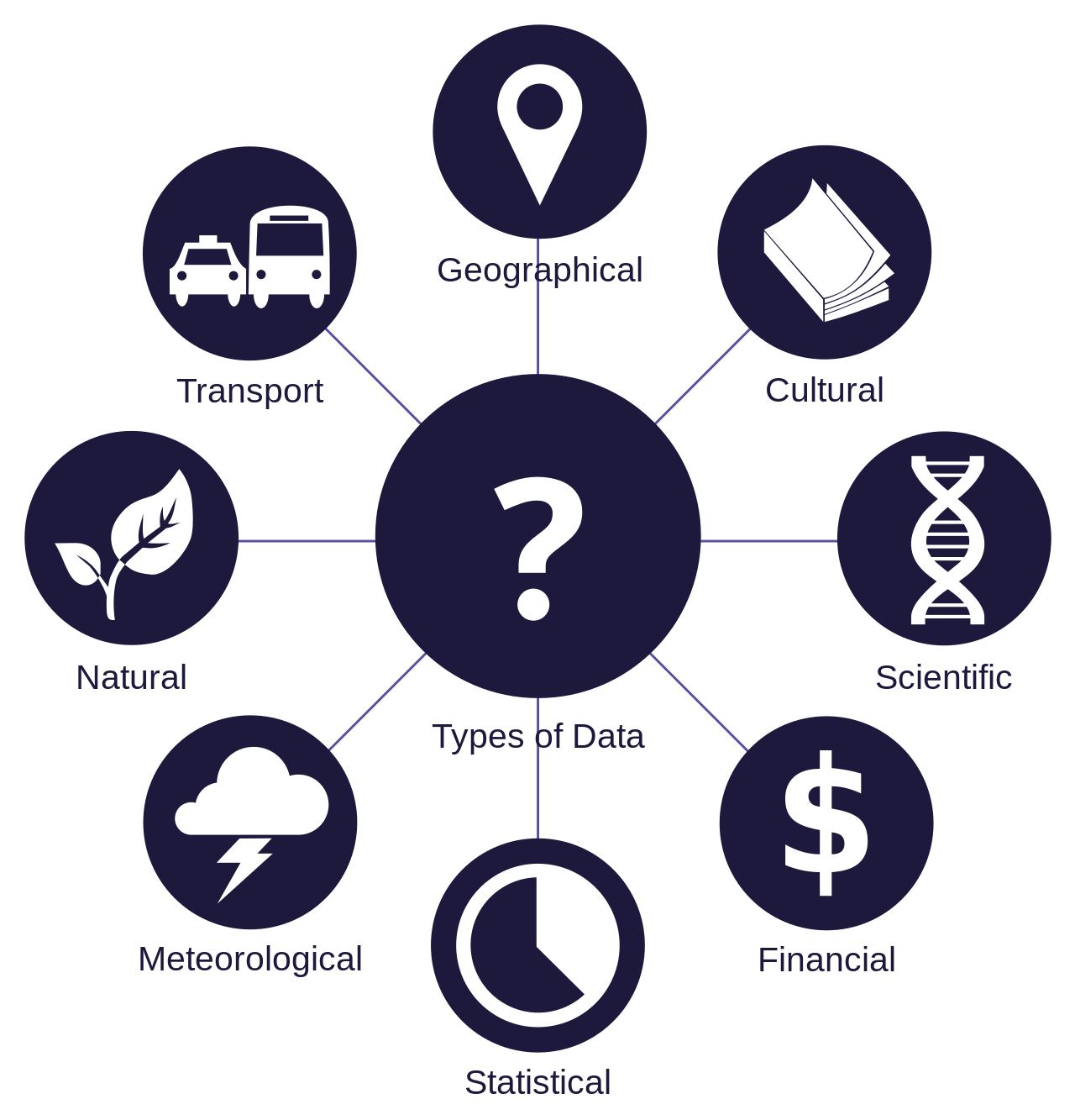
Data, at its most fundamental, is a collection of facts, figures, or observations that can be quantified, qualified, or otherwise recorded. Think of it as the raw building blocks of knowledge. A single piece of data, a 'datum,' might be a temperature reading, a customer's purchase history, or a word in a document. These individual points gain significance when collected and organized, forming datasets that can describe quantities, qualities, or even abstract concepts. Without context, data is just noise; with it, it becomes the foundation for understanding the world around us. The interpretation of data is key to unlocking its potential value.
📈 Who Uses Data and Why?
The users of data span nearly every human endeavor. Scientists rely on experimental data to test hypotheses and build theories, economists use economic data to model markets and predict trends, and businesses leverage customer data to refine strategies and improve services. Even in everyday life, we encounter data through news reports on public opinion, weather forecasts, or sports statistics. Essentially, anyone seeking to understand a phenomenon, make an informed decision, or identify patterns will turn to data. The ability to collect, process, and interpret data is becoming an increasingly vital skill across all professions.
🗂️ Organizing and Structuring Data
Raw data, in its unorganized state, offers limited utility. Therefore, structuring data is a critical step in making it meaningful. Common organizational formats include tables, where data is arranged in rows and columns, allowing for clear relationships between different variables. Databases provide sophisticated systems for storing, managing, and retrieving vast amounts of structured data. For unstructured data, like text or images, techniques such as NLP and computer vision are employed to extract relevant information and organize it into more usable forms. The choice of structure profoundly impacts how data can be analyzed.
💡 From Data to Information: The Transformation
The transformation of data into information is where its true power lies. Data are the raw facts; information is the result of processing, organizing, and contextualizing that data to reveal patterns, relationships, and insights. For instance, a collection of individual sales figures (data) becomes a sales trend report (information) when analyzed over time. This process often involves analytical techniques, visualization tools, and BI platforms to make complex datasets understandable. Without this interpretive layer, data remains inert potential.
🔬 Data in Scientific Research
In scientific research, data is the bedrock of discovery. From astronomical observations to genetic sequencing, scientists meticulously collect and analyze data to understand the natural world. The scientific method itself is a framework for gathering empirical data through experimentation and observation, then using that data to support or refute hypotheses. Rigorous data collection, statistical analysis, and peer review are essential to ensure the validity and reliability of scientific findings derived from data. Misinterpreted or flawed data can lead research down unproductive paths.
💰 Data in Economics and Business
Economics and business are heavily reliant on data for decision-making. Economic indicators like Gross Domestic Product, inflation rates, and unemployment statistics provide a snapshot of an economy's health. Businesses use sales data, customer demographics, and market research data to understand consumer behavior, optimize pricing, and forecast demand. Financial modeling and risk assessment are complex processes that depend entirely on accurate historical and real-time data. The effective use of data can provide a significant competitive advantage.
⚖️ The Ethics and Governance of Data
As the volume and utility of data grow, so do concerns about its ethical use and governance. Issues such as data privacy, data security, and algorithmic bias are paramount. Regulations like the General Data Protection Regulation aim to protect individuals' rights regarding their personal data. Establishing clear data governance policies ensures that data is collected, stored, and used responsibly, transparently, and in compliance with legal and ethical standards. The responsible stewardship of data is crucial for maintaining public trust.
🚀 The Future of Data: Trends and Innovations
The future of data is characterized by exponential growth and increasingly sophisticated analytical capabilities. AI and machine learning are unlocking new ways to extract insights from massive, complex datasets, often in real-time. The Internet of Things (IoT) is generating unprecedented volumes of sensor data, while advancements in cloud computing provide the infrastructure to process it. We can expect more personalized experiences, more efficient systems, and potentially new forms of data-driven discovery, but also heightened challenges in managing and securing this ever-expanding data universe.
Key Facts
- Year
- 2023
- Origin
- Don't Miss That Window
- Category
- Information & Analytics
- Type
- Concept
Frequently Asked Questions
What is the difference between data and information?
Data refers to raw, unorganized facts, figures, or observations. Information is the result of processing, organizing, and contextualizing data to give it meaning and make it useful for decision-making. For example, a list of temperatures is data; a report showing a warming trend based on those temperatures is information.
Why is data organization important?
Organizing data transforms it from a chaotic collection into a structured resource. This structure allows for efficient storage, retrieval, and analysis, making it possible to identify patterns, draw conclusions, and derive meaningful insights. Without organization, data is largely unusable.
What are some common ways data is structured?
Data is commonly structured into tables with rows and columns, which is the basis for relational databases. Other formats include spreadsheets, JSON files, and XML documents. For unstructured data like text or images, specific methods are used to extract and organize key elements.
How does data apply to everyday life?
Data influences many aspects of daily life, from weather forecasts and traffic updates to personalized recommendations on streaming services and online shopping. News reports often cite statistics and survey data to inform the public about social and economic issues.
What are the ethical considerations when working with data?
Key ethical considerations include data privacy (protecting personal information), data security (preventing unauthorized access), consent (ensuring data is collected with permission), and avoiding bias in data collection and analysis, which can lead to unfair outcomes.
What is the role of data in scientific discovery?
Data is fundamental to the scientific method. It is collected through experiments and observations, analyzed to identify patterns and relationships, and used to test hypotheses and build theories. Reliable data is essential for validating scientific claims and advancing knowledge.